Have you ever attempted to upload a file, photo compressor to 20kb with height and width but then you receive a ‘file too large’ notification? Or worse, have you tried uploading a photo and receive this message instead? Yes, it can be quite tedious. However, this is where a photo compressor becomes beneficial. You are able to compress the images down to 20KB, while also having the option to adjust the height and width as well. This not only helps in sharing the photos easily, but also increases the speed of your webpage. Let’s get started on streamlining your pictures for the web while still maintaining quality.
Key Takeaways
- For proper website loading and easy sharing of the photos, image compression is extremely important.
- Choosing a good photo compressor means that the picture quality will remain high, while the size is decreased to 20KB.
- Further managing the images with respect to dimension will allow further management of the file size.
- Identifying the right tool requires batch processing and format support as the defining features.
- Common mistakes while compressing should be avoided in order to ensure that your compression images maintain quality, regardless of their size.
Understanding the Importance of Image Compression
Why Compress Images to 20KB?
The storage space is a constant concern so saving it is of utmost importance. photo compressor to 20kb with height and width At the very least we can strive to make it seem like it is not an issue. Having image sizes compressed to 20KB will help in ensuring that we save storage space while making it convenient for both uploads and downloads. Prioritize mobile users, especially since they generally have data restrictions.
Lower resolution images load faster on websites which enhances user experience and lowers the bounce rates.
Effects of Website Performance
Image size is one of the most important factors to consider in website performance. Bigger images tend to slow down the website which increases the load time and can drive away potential visitors. Adjusting your image files can drastically improve how fast your website loads. Your users will be happier, and your website will rank higher in search engines. Lastly, remember, Google uses this as a ranking factor so take it into serious consideration.
Improvement for Social Media Usage
Social media is all about fast engagement. Sharing accounts becomes easier with compressed images because making posts requires less effort. Smaller files permit users to keep more photos on their phones while freely sharing them across different platforms with little worries about slow upload speeds and platform limitations. Additionally, compressed images are stored permanently enabling the user to take many pictures and, without internet connections compressed images will not lose quality.
The Best Methods To Choose The Photo Compressor Tool
Features to Consider
Speed and Quality should always be the first priority when picking a photo compressor to 20kb with height and width and should answer the question, “Does it take an unreasonable amount of time to compress while compromising the image quality?”
Look for functionalities like support of diverse file types – JPG, PNG, and GIF, for instance. Some tools offer batch processing, which is useful if you need to compress several images at one time. Moreover, a reliable tool that highlights privacy is a must, especially when dealing with sensitive images.
Analyzing Well-Known Software
Different photo compressors come with diverse sets of perks. Tools like NitroPack are favorite tools for many site owners who need cloud-based solutions since they offer much more than just compression. For example, performance boosters such as these are not offered by lesser known software. Meanwhile, Fotor is well known for user-friendliness and its range of supported formats with dedicated software that works seamlessly across them. Pi7 Image Tool is another strong candidate as it is able to offer solid compression speed along with high image quality retention.
Simplicity of Use
A good photo compressor should be intuitive. Seek out those online tools without complicated sign up procedures which allow dragging and dropping files, sliding to the desired value, and even preview options. This eliminates the ordeals that many face when attempting to compress their images. Tools that are able to compress image files to zip format are a plus as they make file storage easier.
Choosing the right software can boost your productivity manifold, especially when you work with a lot of images.
The right tool ensures that you have the right image saved and edited, regardless of size, and also saves you time.
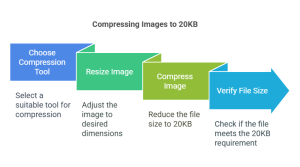
How to Adjust File Size of Your Images to 20KB Step-by-Step
How to Upload Images of Your Choice
Online tools are mostly straightforward. Make sure you drag and drop your image file into the designated area or click to upload from your device. photo compressor to 20kb with height and width Once this is done, make sure you place the image in supported formats, for example, JPEG, PNG, or GIF. If you have a lot of images, you can upload a couple of them at the same time as tools allow this, and this feature is beneficial.
How to Adjust Compression Settings
This part will allow you to change the size of your files, although it now comes with a downside. Sizable tools will usually have slider bars where you can set height and width in pixels along with options, in this case, 20 KB. Some file compression tools can be larger, but if you decide to multi-compress, screens are virtually unmanageable. If you want better quality, range compression options are available. Lossy ranges sustain loss of detail, but cut overall size, while lossless maintains utmost quality, but gives little to no reduction in siza. Midrange compressing is save-able, and preserves quality throughout.
Downloading the Changes From A Compressed Tool
Once all your preferences are set, you can decompress and your tool must allow you to download it. Click the button will practically save it right away. If you do not notice the file’s new size instantly, try refreshing the tool, and it would appear.
Your image should be ready to download in a couple of seconds. Make sure you save the new compressed image to your device. photo compressor to 20kb with height and width You should always review the image you’ve downloaded to check if the quality meets your needs. If everything looks good to go, you’re set to use your image on a website, social media, or anywhere else you may need.
How To Reduce Image File Size Without Compromising Quality
Complexities Of Lossy vs. Lossless Compression
You may have heard about lossy and lossless methods of compression when it comes to images. Lossy compression is a software function that shrinks data to decrease file size by eliminating some information which can lead to a decline in quality. This method is best when the file needs to maintain a lower size. However, lossless compression makes sure that quality is never compromised. Images of great importance that need to remain intact can use this method, but the file size will not decrease that drastically.
Tricks To Maintain Image Quality
Here are some handy tips to follow if you want to maintain sharpness of your images while altering their size:
- Choose the Right Compression: If quality is your primary goal, lossless compression though more difficult is the best solution.
- If a bit of quality trade-off is okay, then Lossy is useful.
- Do Not Over Resize: Make adjustments that you need, but not to the extent that the image loses its clarity or detail. Doing too much will result in pixelation.
- Be Specific: Specific tools such as Shrink.media allow you to reduce size without roofing, so it well aids in the process.
Sometimes, if proper care is not taken, reducing an image’s size can result backfire. Here are common mistakes to look for:
- Over-Compressing: This could happen with trying to reduce file size through aggressive compression, which results in blurry and pixelated images.
- Ignoring File Formats: With other formats such as PNGs you will have later compression issues. photo compressor to 20kb with height and width These files are larger than JPEGs after compression, so think wisely.
- Skipping a Backup: Never, ever, ever delete your original image. Always keep a copy because once it is compressed, then the quality of the image cannot be restored to its initial state.
Ensure to perform color corrections, retouching, and effects to the final image size so precision is guaranteed.In this case the risk of outdoing the quality is minimal.
Next Steps for Image Resizing
Adjusting the Overall Width and Height
Perfecting resizing is not about making an image smaller, rather adding specific regions or features to fit the requirement.
Altering the height and width of an image can affect how it appears on various platforms. You should try to maintain the aspect ratio while resizing in order to prevent stretching or distortion of the image. Locking the aspect ratio is a feature available on most tools. photo compressor to 20kb with height and width Locking the aspect ratio ensures that when one dimension is changed, the other dimensions will be adjusted automatically in proportion.
Working With Batch Processing
Not having a zoom function can be a nuisance when documents are being worked upon individually, but Batch Processing makes it easier.Here’s the deal: instead of doing photos individually, modify the dimensions of several pictures at once. Simply select the images, make your selection, and the software will automatically do the rest. This feature works wonders for businesses looking to add or change images, or for photographers who have to scroll through hundreds of images.
Adapting for Specific Platforms
Different platforms have their requirements with pixels for websites, social media, and emails. For example a Facebook cover page has a different display pixels than an Instagram page does. Adjusting your images to meet these requirements will ensure that they look their best to your viewers. You should always keep a note of the specifications of the platforms that you use the most and their dimension particulars.
This way, you will be able to resize images with ease without measuring them manually every time.
When someone resizes images, there are three important factors they need to take care of, that is the image must load in a matter of seconds, the image should be sharp, and the image should fit the place it is meant to be displayed. Proper resizing of images can aid in improving the viewer’s perception of the content.
How To Fix The Most Frequent Compression Problems
Quality Degradation
When an image is compressed into 20KB file size it is very likely that it will result in decreased quality of the image. File size and quality of an image are inseparable. This can be solved in the following way: The tool should allow you to set different levels of compression. You will allow to find out the highest level of compression without losing any quality.
- Make sure to start with a higher quality setting, and later on decrease it.
- Utilize the preview function and compare both images.
- Choose lossless compression if possible, even though it will be difficult to hit the 20KB mark.
Unsupported Formats
Some compressors might not allow every image format to be uploaded for compression. In this case, check the list of supported formats by the tool.
Options for Bulk Compression
Another highlight from photo compressors is the feature that allows bulk compression. Using this feature enables the user to compress a group of images all at once which saves a lot of time.
You wouldn’t want to compress each of your 50 photos by hand now, would you? Instead, just upload the lot, set your parameters and let the tool do its magic. Most of the tools will package these files into a single zip folder for easy downloading. This is especially useful when managing a lot of images at the same time.
Format Conversion Expertise
There are photo compressors that have format conversion built right into them. With these tools, you can go from one format to another without the need for an additional app. These tools are great for anyone who has to convert PNGs into JPGs or GIFs into BMPs. There is also good news because they support lots of different formats so you can use them without worrying whether they will support the platform you wish to use.
Security Considerations
When handling images, security and privacy are a paramount concern. It is critical that your images are safe during the compression process. Tools that allow for secure uploads and encrypt your images are best for you. There are platforms like Pi7 image tool or Fotor where the focus is on protecting data which means that your images are not left unprotected on the web. It’s nice to know that those personal photos are treated with a degree of confidentiality.
By having these additional features, your workflow is more optimized and there is one less thing to worry about in terms of the security and safety of your images.Amateur or professional, it does not matter, these features will help you tremendously for your image management works.
Read more >>>>>>>> Mastering the Art of Compressing Images to 100KB Without Losing Quality A Comprehensive Guide
Conclusion
So there you have it folks. It is not advanced rocket science to set a photo compress to get a size of 20KB. With Shrink.media, Fotor, and many others, you can resize your image’s height and width without having to worry about quality. For web pages, social media, or simply gaining some extra space, these tools make it easy. Gone are the days of waiting long minutes for images to load or battling with large file sizes. A couple of clicks, and you’re all set. Try it out today and watch how much smoother your digital life can be!
Frequently Asked Questions
How can I reduce an image to 20KB without losing quality?
You can use online tools like Shrink.media or Fotor to compress images to 20KB. These tools rely on cutting edge algorithms to ensure that they maintain quality while working to minimize the size.
What steps do I follow to compress an image to 20KB?
Upload your image to an online compressor, change the settings to suit your needs, and then get the file to download so you can finish the process. You’re done!
Is it possible to compress a large image to 20KB?
Yes, tools like Fotor or Shrink. media allow users to set a specific file size which the image can be compressed to. So, large images can be compressed to 20KB as well.
Yes, it is possible to compress large images to 20KB using tools that allow you to set a specific file size such as Fotor and Shrink.media.
Is it safe to use online image compressors?
Most online tools are safe, just be sure to use those that are reputable and have a good track history of ensuring data security and privacy.
Most online compressors are safe, but it is highly recommended that you choosen those that are reputable for data ssecurity and priacy.
How long does it take to compress an image to 20KB?
Depending on the tool you use and your internet connection speed, compressing an image to 20KB usually takes a few seconds.
Depends on the institution you use and your internet speed, compressing an image to 20KB can take a couple of seconds.
Can I compress multiple images at once to 20KB each?
Yes, there are some tools that allow batch processing which means you can compress multiple images to 20KB each in one operation.
 English