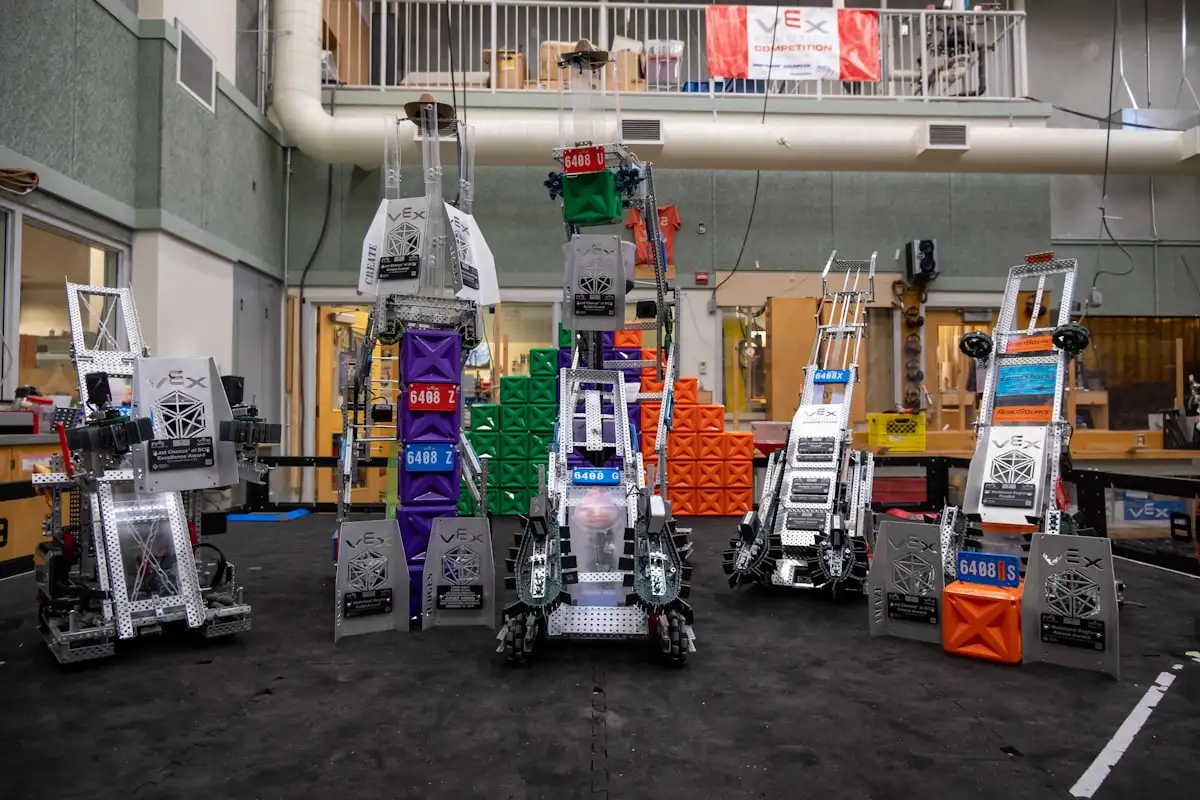
Big news from UCLA! Scientists there are now using super smart robots to help them study tiny cells and tissues. These special robots, powered by AI (Artificial Intelligence), are making science work much faster and easier. It’s like having tireless helpers in the lab, bringing automation to very important research.
UCLA Uses AI-Powered Robotics to Speed Up Cell Research
Imagine tiny building blocks that make up everything alive. Those are cells! Scientists at UCLA study these cells and groups of cells, called tissues, to understand how our bodies work. They also look at how diseases affect us. It’s really important work for finding new medicines and cures.
But studying cells can be slow. It often means doing the same tasks over and over again. This is where AI-powered robotics come in. These robots are not just machines; they are smart. They can learn and do many jobs that people used to do.
The robots in the lab can move samples, mix liquids, and take many pictures. They do all this with great care and precision. This helps UCLA scientists gather a lot of information very quickly. It also means fewer mistakes, which is a big deal in science.
With robots taking care of the simple, repetitive tasks, human scientists can use their brains for harder problems. They can think about what the results mean and plan new experiments. This speeds up the whole process of scientific discovery.
How Automation Helps Scientists Study Human Cells
When we talk about “automation,” it simply means machines doing work by themselves. In the UCLA lab, robots are automating many steps in cell research. They can handle very delicate cell samples without dropping them or mixing them up.
Think about how many tests a scientist might need to run on different types of cells. A robot can set up and run hundreds of these tests at the same time. This would take a person a very long time. The robots gather huge amounts of data, which are like facts and numbers, for the scientists to look at.
For example, if scientists want to test a new medicine, they need to see how it affects many cells. The robots can add the medicine to lots of cell samples and then watch what happens. They can even take pictures of the cells every few minutes. This kind of detailed and constant watching is almost impossible for a human to do alone.
This UCLA research is paving the way for faster insights into how medicines work. It helps in understanding what makes cells sick. This could lead to breakthroughs in treating many illnesses.
The Benefits of AI and Robotics for Tissue Studies
Tissues are groups of cells that work together, like muscle tissue or skin tissue. Scientists study tissues to understand diseases better. They look at how a disease changes the tissue’s structure or how cells in a tissue react to something new.
With AI-powered robots, scientists can look at many tissue samples much faster. The robots can prepare the samples and then use special cameras to take detailed images. They can even zoom in to see very tiny things.
These smart machines are also good at finding patterns. Sometimes, diseases cause tiny changes in tissue that are hard for a human eye to spot. An AI program can be taught to look for these specific changes. It can then alert the scientists to areas that need closer inspection. This makes the search for clues much more efficient.
Finding these patterns quickly helps scientists understand diseases better. It can speed up the process of finding ways to stop or even cure them. It’s a huge step forward for medical research.
Making Research Faster and More Accurate with Smart Machines
AI, or Artificial Intelligence, means computers and robots can “think” or learn. They learn by looking at lots of information, called data. The more data they see, the smarter they get. In the lab, this means the robots get better at their jobs over time.
Because robots follow exact instructions and don’t get tired, they help avoid errors. This means the research results are much more reliable. When results are reliable, scientists can trust them more. This makes it easier to move forward with new ideas and experiments.
For example, a robot won’t accidentally mix up two different samples. It won’t forget a step in an experiment. This attention to detail is crucial in science. It makes sure that the conclusions scientists draw are based on solid, accurate information. This kind of automation in cell research is transforming how discoveries are made.
The Future of AI-Powered Robotics in Science Labs
What’s happening at UCLA is just the beginning. More and more science labs around the world will start using AI and robots. This technology is going to change how science is done in a very big way.
These smart robots will help us learn more about our bodies and diseases than ever before. They will help discover new treatments for challenging diseases like cancer, diabetes, and Alzheimer’s. The speed and accuracy of medical research will increase dramatically.
Imagine a future where robots are a common sight in every research lab. They will be partners with human scientists, doing the hard, repetitive work. This will let brilliant scientists focus on their best work: thinking, discovering, and inventing. AI-powered robotics truly opens up new doors for scientific exploration and a healthier future for everyone.
Photo by Syntechs Robotics on Unsplash
 English